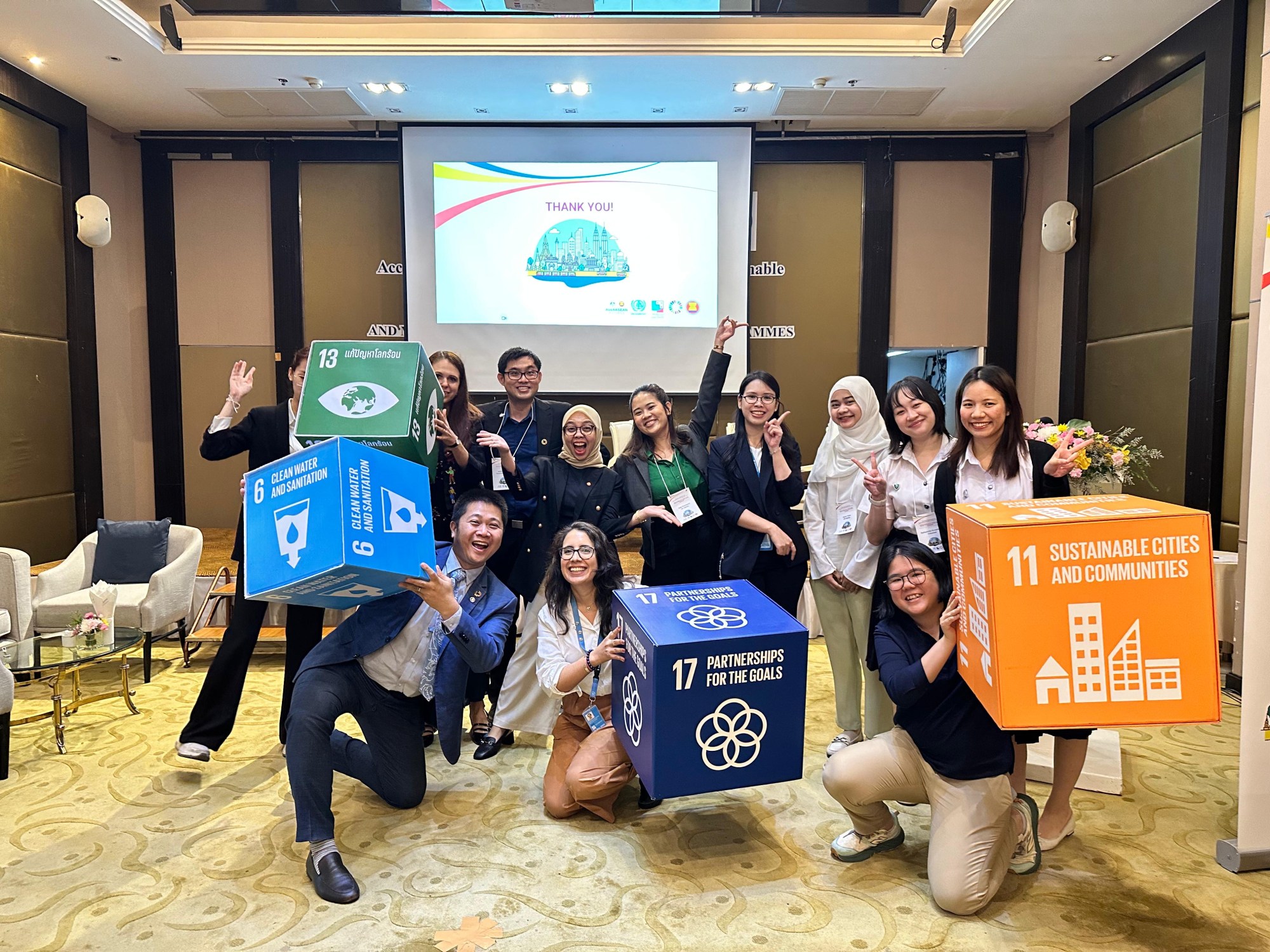
As I have started working at the UN Resident Coordinator’s Office in Thailand since August 2025, I am writing this post to capture my experiences at the UN-Habitat Bangkok Programme Office, highlighting the selected works and reflecting on them. I also hope that this post will be useful for anyone without an international relations background who aspires to work at the UN.
Before joining UN-Habitat, I was a Plan and Policy Analyst at the Office of the National Economic and Social Development Council (NESDC), a national think tank under the Prime Minister’s Office, responsible for social and economic policies for the country. At NESDC, I worked in the Urban Development Strategic Division as I got a Royal Thai Government Scholarship to study urban and regional planning from the University of Wisconsin-Madison. After working for a few years, I applied for work at international organizations to see if my skills could compete with the market. One of the jobs I applied for was with the UN-Habitat Bangkok Programme Office, and, luckily, I got the job offer. However, at that time, I still had another year to serve the Thai Government as a condition of the Scholarship, so I took a secondment from NESDC to work at UN-Habitat for the first 10 months from January – October 2021, before I fully joined the office after that.
I started my work at UN-Habitat in January 2021 as a Local Project Officer for the ASEAN Sustainable Urbanization Strategy (ASUS), Phase I, where I mainly supported Hatyai City Municipality to develop a City Diagnostic Report and a City Technical Proposal. After the ASUS Project, between 2022 – 2023, I started working on other UN-Habitat’s work by supporting the assessment of solid waste and wastewater management systems in Thai cities where I learned Waste Wise Cities Tool and Fukuoka Method.
My responsibilities grew broader. Since 2023, I held a position of National Technical Expert, then a National Programme Officer, responsible for projects and coordination in Thailand. I would summarize my work into 3 categories:
- Working with local governments, mainly city municipalities, on improving their planning process.
- Supporting national governments on urbanization-related policy making.
- Support the coordination within the UN system to ensure “One UN” approach.
- Supporting the office in miscellaneous matters: proposal development, events, bilateral meetings, and high-level missions.
Belows are the selected projects and events that highlight my work at UN-Habitat.

With ED and RR during a site visit of National Housing Authority during the 81th Commission Session at UNCC, April 2025 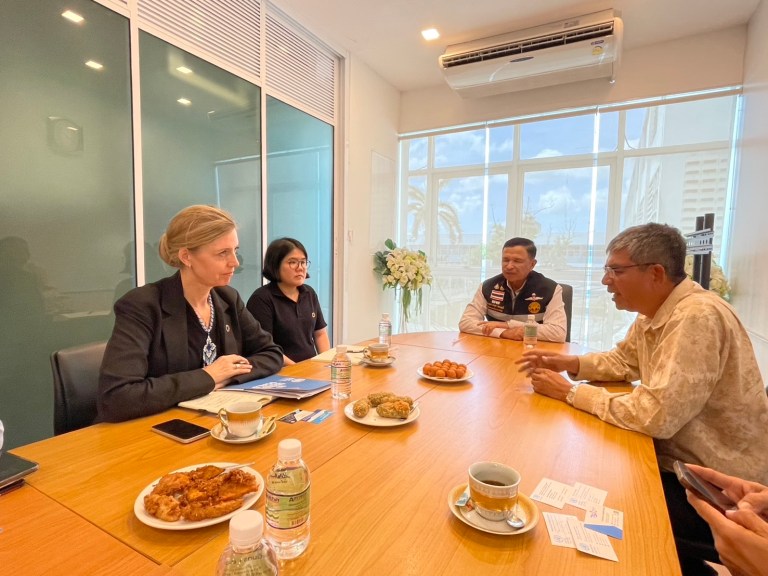
With Mayor and Deputy Mayor of Hatyai City and RC, March 2025 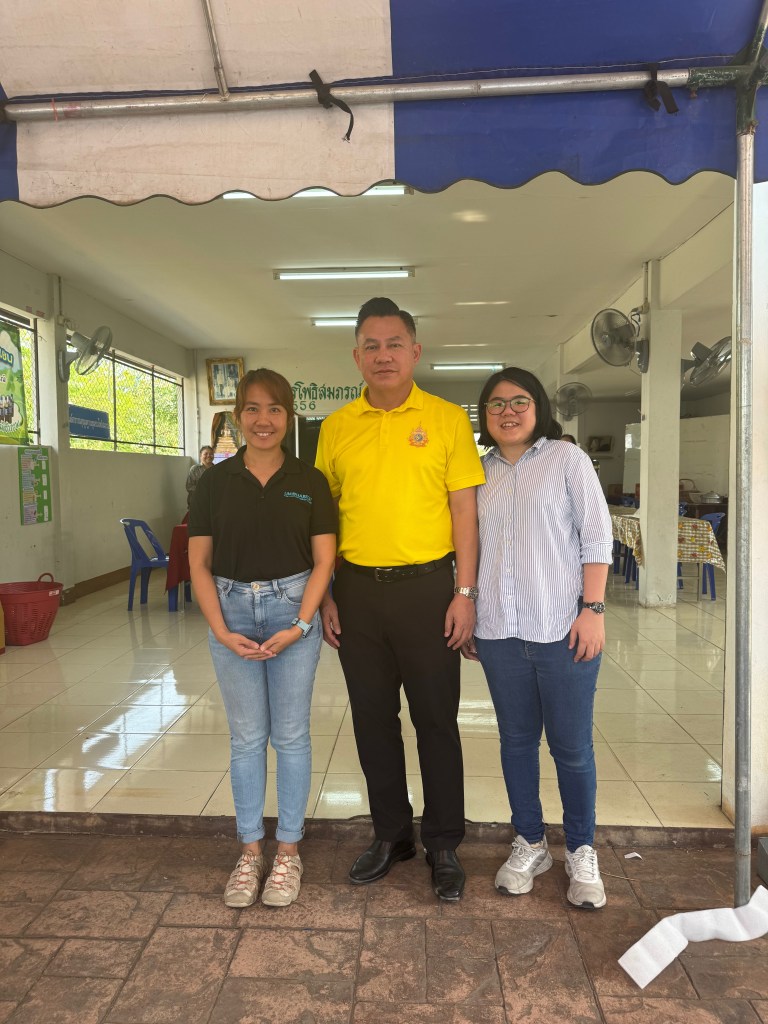
With Mayor of Udon Thani at a Community Waste Bank, February 2025 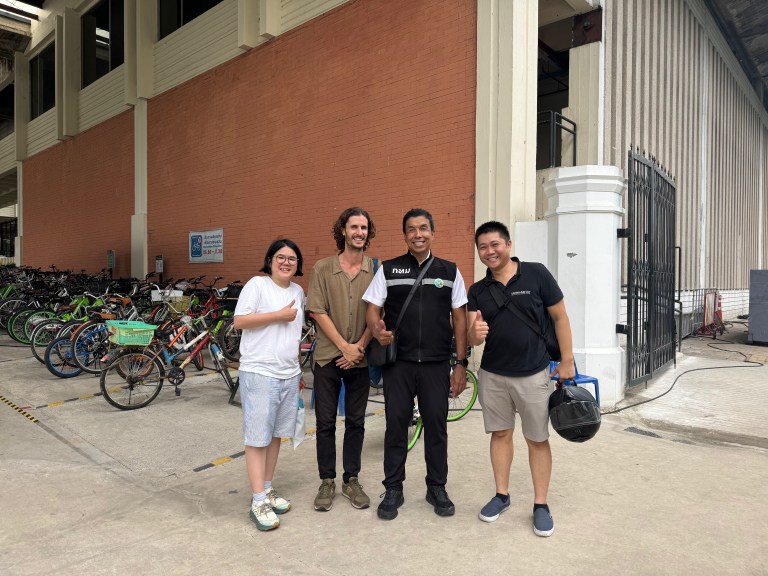
With BMA Governor at BMA Expo, May 2025
Voluntary Local Reviews: A City’s Voluntary SDG Review Process
Voluntary Local Review is a process through which local and regional governments can voluntarily assess and report on their progress towards achieving the United Nations’ Sustainable Development Goals (SDGs). These reviews allow municipalities to share their experiences, challenges, and successes in implementing the SDGs at a local level, contributing to a global understanding of sustainable development efforts. Currently, there are 257 local governments in 63 countries that have developed their VLRs. I supported Thai cities in developing VLR which reflects their current status of SDG development, current initiatives that contribute to SDG achievement, and recommendation of future actions.
In the process, we started by identifying priority SDGs and relevant indicators. Then, to collect data, in both quantitative and qualitative manners, to report on the selected indicators. Data can be secondary (from reports) or primary (surveys, interviews). The data will show the progress toward the SDGs. In these steps, engagement from all sectors: public, private, academia, CSOs, including vulnerable groups, are crucial.
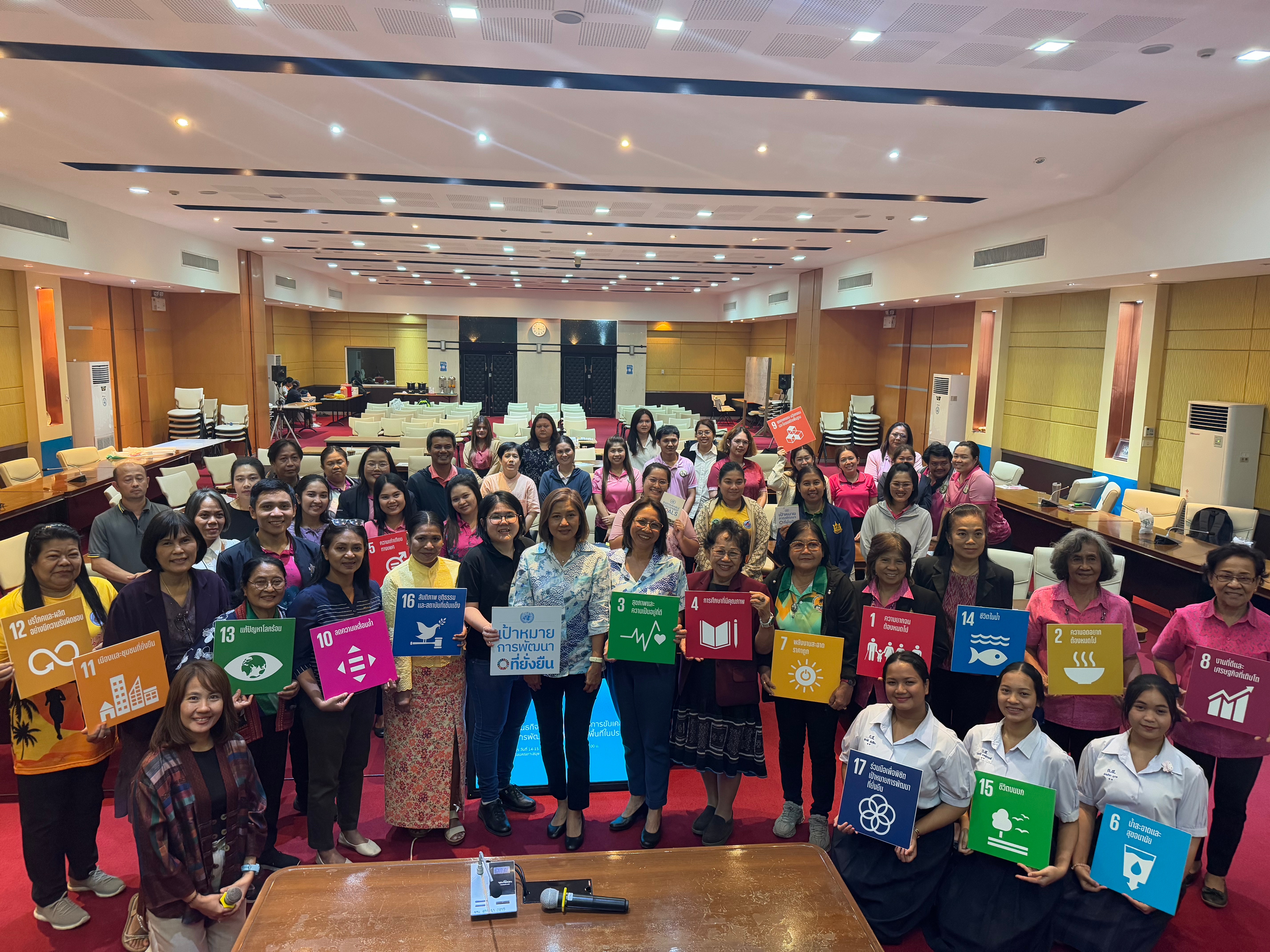
Between 2023 – 2025, I helped Thai cities to develop VLRs. Udon Thani City Municipality is the second city in Thailand to develop a VLR report and the first city in the country to apply the Global Urban Monitoring Framework (UMF), UN-Habitat’s tool for urban monitoring, as a data collection framework. The report has been launched at the twelfth session of World Urban Forum in Cairo, Egypt, in November 2024, and uploaded on SDG Localization’s website here.

The fun part of VLR for me is the indicator selection exercise and the data collection process, where I used my skills in spatial analysis that I learned from UW-Madison. Indicators should be selected based on relevance to both the city’s priority and globally, importance, and data availability. After the indicators are selected, we start the data collection process, where the data is usually not available or requires further analysis. I did a crowdsourcing of cultural spaces with municipal staff using Google My Maps to identify locations. Then, I created a shapefile of those spaces in QGIS for the analysis of the share of space to the total municipal areas and the visualization. I also calculated the unregistered population of a city using nighttime light imagery for the estimation.
UMF: Framework for Urban Monitoring
Global Urban Monitoring Framework (UMF) is a comprehensive tool designed to help cities and countries track progress towards sustainable urban development. Endorsed by the UN Statistical Commission in 2022, the UMF harmonizes various existing urban indices into a single, universal framework to monitor the Sustainable Development Goals (SDGs), particularly SDG 11 on sustainable cities, and the New Urban Agenda. It provides a standardized set of indicators and metrics for cities to gather and analyze data on their social, economic, and environmental performance.
At UN-Habitat, I supported government agencies in Thailand to improve urban monitoring by adapting UMF in data collection and analysis process. Udon Thani City Municipality is the first city in the country to use UMF as a data collection tool for their VLR.
UMF is interesting for me as it is a data collection framework that helps you to see how we define “a good city”, by 5 domains (social, economic, environment, culture, and governance) and 4 city objectives (safe, inclusive, resilient, and sustainable). The data collection methods are various, from desk research to surveys and expert interviews. I had to read the indicator’s metadata and methodology, and see if it was possible for a city/Thailand to find the data. If not, which data should we use as a proxy? It was fun to work on statistics, policies, and also coordination with government at the same time.
UMF’s methodology can be downloaded here.
Waste Wise Cities Tool: Assessment of Solid Waste Management for Cities
Waste Wise Cities Tool (WaCT) is a 7-step tool designed to help cities assess and improve their waste management systems. It provides a comprehensive framework for cities to monitor, plan, and implement sustainable waste management practices. The tool evaluates waste management performance across multiple dimensions, including waste generation, collection, recycling, and disposal aspects. It aims to support cities in setting targets, tracking progress, and fostering circular economy principles to minimize waste, reduce environmental impact, and enhance urban sustainability.
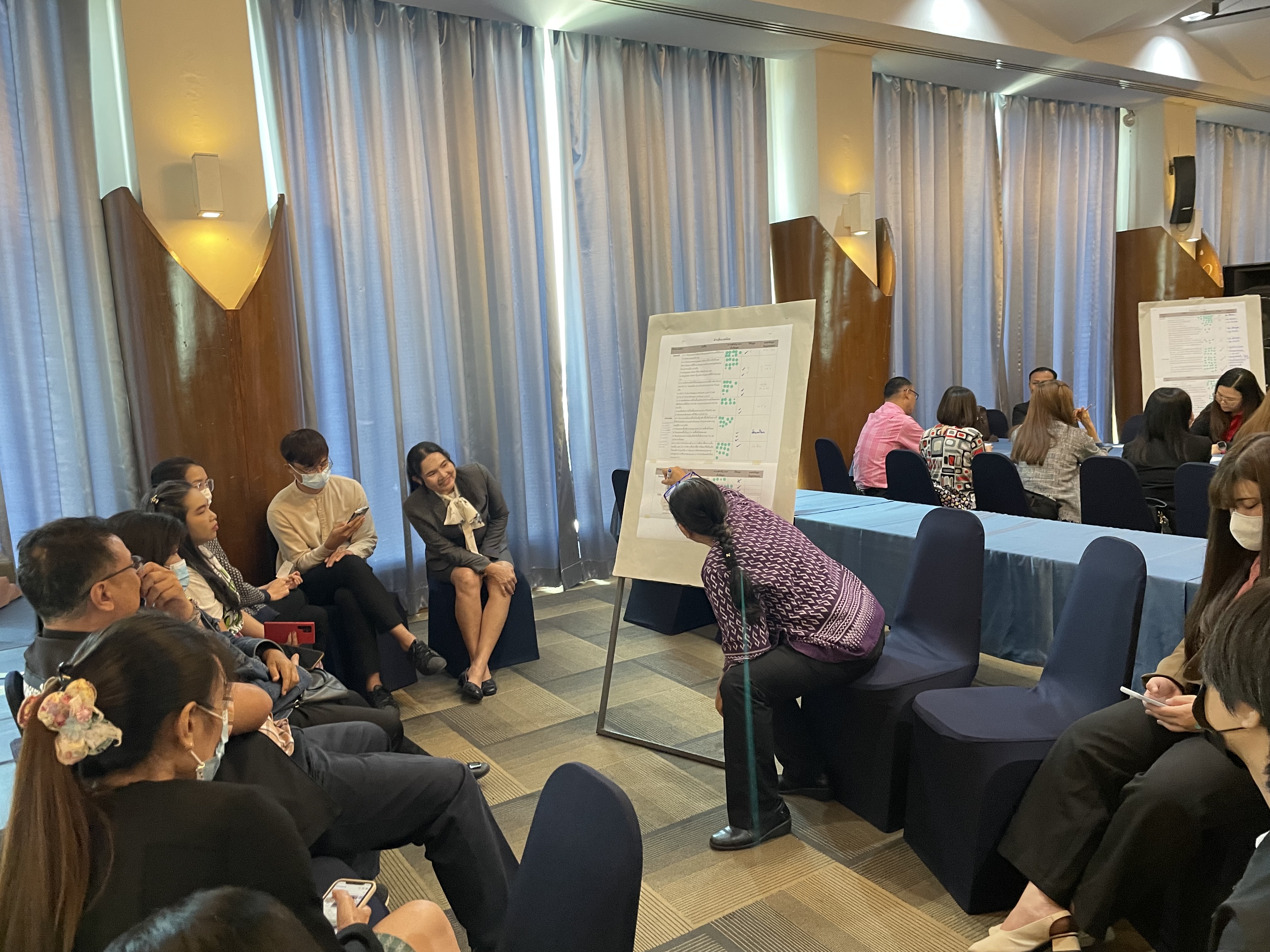
In 2022, I supported local governments in applying the tool to assess their solid waste management system. After the assessment, I supported the UN Resident Coordinator’s site visit to Laem Chabang Landfill and presented UN-Habitat’s work on solid waste management to 76 Provincial Governors of Thailand on the signing of the Statement of Commitment for a Sustainable Thailand in June 2022.

At Laem Chabang Landfill with RC Gita (currently RC Indonesia), May 2022 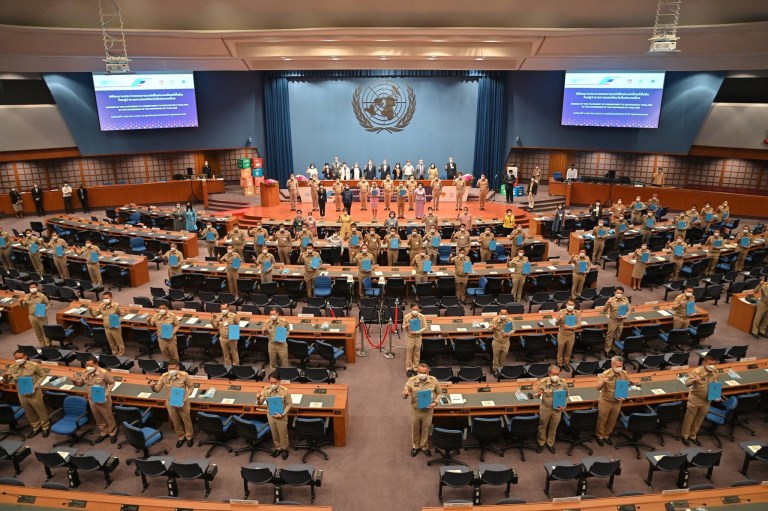
The signing of the Statement of Commitment of 76 Governors, June 2022 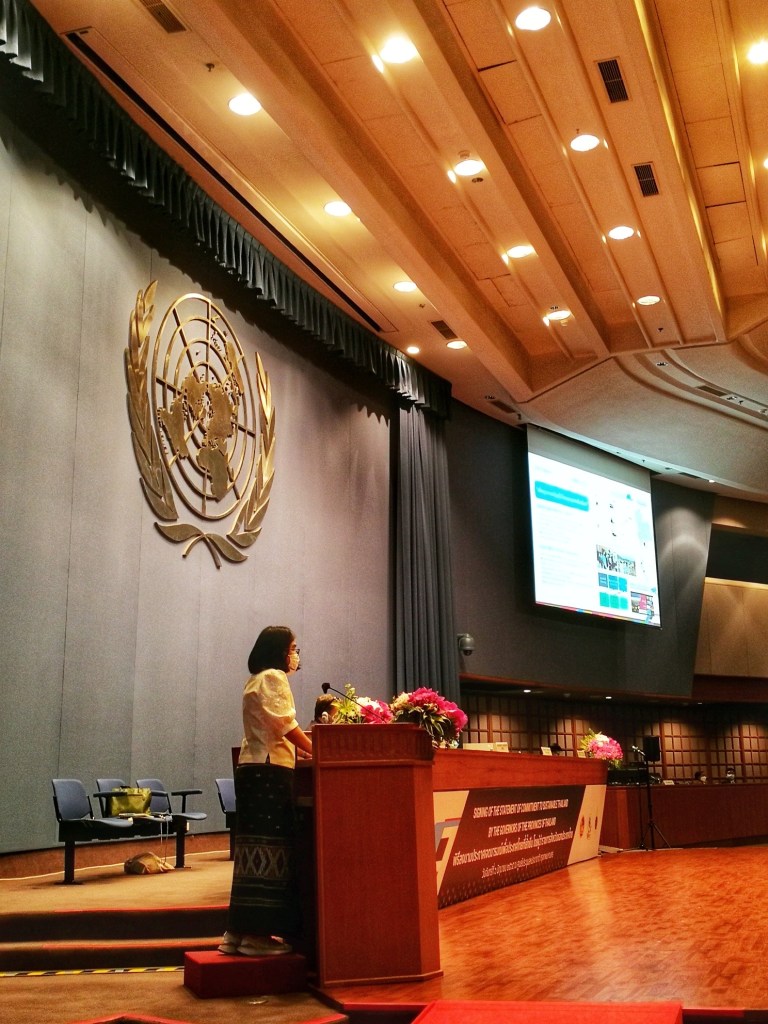
Presenting UN-Habitat’s work to 76 Governors, June 2022 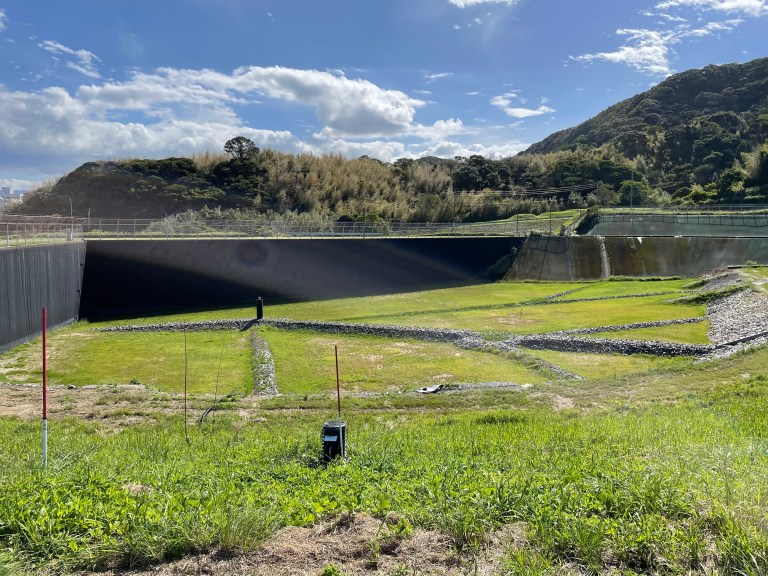
A field visit to Fukuoka to study Fukuoka Method, October 2022
Waste Wise Cities Tool’s methodology can be downloaded here.
ASUS: Strategies for Sustainable Urbanization in ASEAN
The “ASEAN Sustainable Urbanisation Strategy” (ASUS) is derived from the “Master Plan on ASEAN Connectivity 2025” (MPAC 2025) under the strategic area of Sustainable Infrastructure, which constitutes the overall strategic framework for the ASUS Project. The ASUS Project aimed at promoting the overall ASUS Framework through local and regional levels outputs. At the local level, ASUS focuses on small to medium-sized cities and intermediate cities in ASEAN Member States (AMS). In the first phase, 8 cities has been selected, for Thailand is Hatyai City Municipality, on the topic of digital safety and security.
As a Local Project Officer, I supported Hatyai in developing its City Diagnostic Report and City Technical Proposal. City Diagnostic Report analyzed the city in different thematic sectors such as economy, transportation, and administration. Findings and recommendations are used to develop the City Technical Proposal which Hatyai picked the topic of digital applications for safety and security. I helped to collect data that UN-Habitat’s Urban Lab needed for analysis. On the City Technical Proposal, I supported the development of the proposal, which involved identifying key stakeholders, organizing stakeholder consultation meetings, and forming the City Steering Committee. These activities were to ensure that the proposal was developed with relevant stakeholders and the sense of ownership by the city.
Apart from the local component of the project, I supported the organization of the ASEAN Sustainable Urbanization Forum (ASUF), which was totally online due to COVID-19, and the development of the ASEAN Sustainable Urbanization Report, which captured the urbanization trends in ASEAN.
After the project, Hatyai used the developed proposal to implement the project, aiming to ensure safety to all citizens and tourists. The Evaluation Report for ASUS can be downloaded here.
ASUS continued to Phase II, starting last year. The selected cities increased from one to three – Chiang Mai Province, Nakhon Si Thammarat City Municipality, and Hat Yai City Municipality.
For me, ASUS is the start of my career in the UN. I changed the nature of work from a Plan and Policy Analyst, who usually work on policies at the national level, coordinating with national agencies, to working directly working with the local level is a learning curve. I had to study local administration, functions, and how they worked with the provincial level and other stakeholders in the city. Working with neighborhoods taught me to tailor language to match the audience, aka how to make the content easy and useful to the audience.
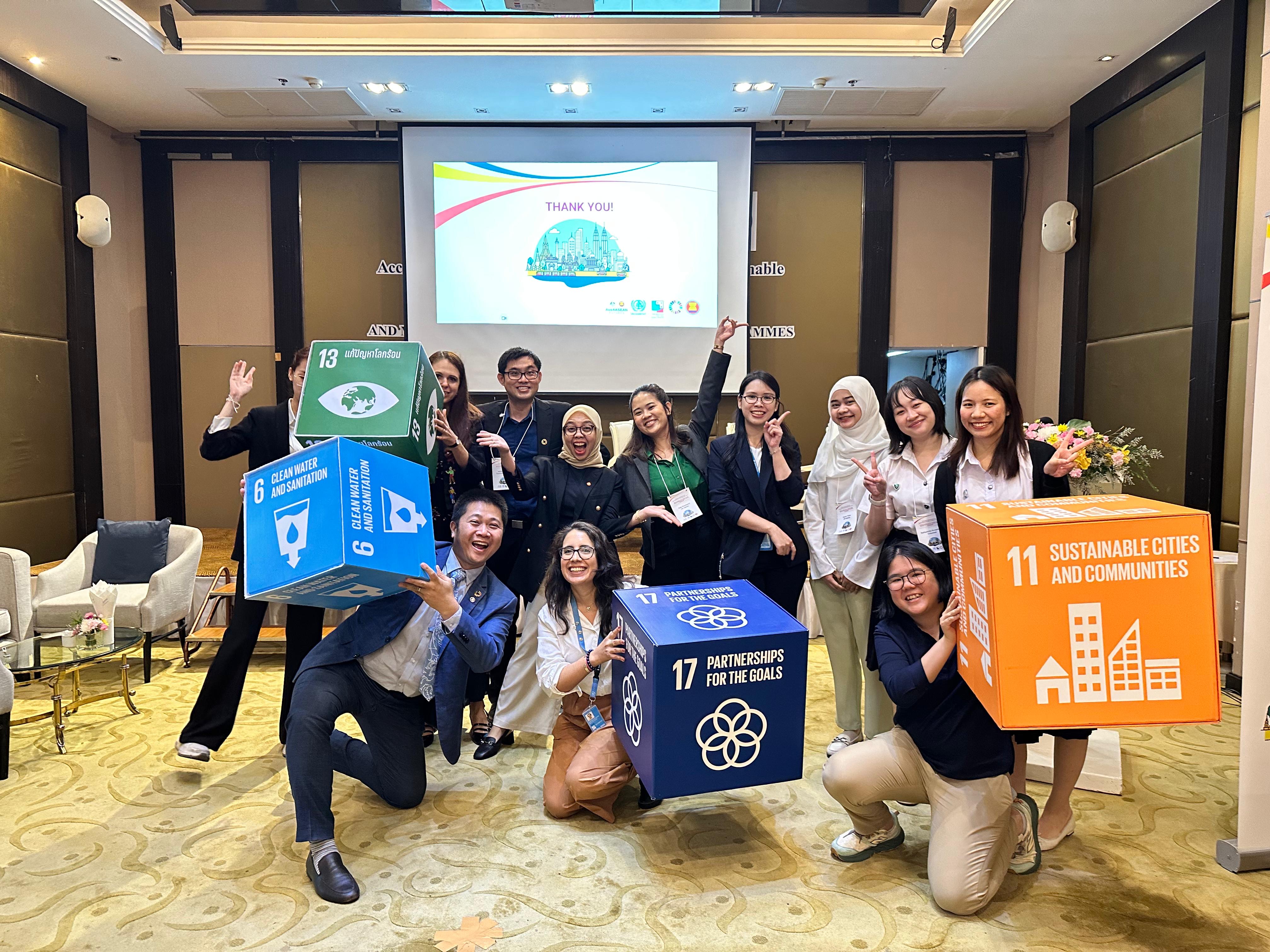
QOL: Defining Quality of Life and Developing Localized Index with
The Quality of Life Program is a global framework designed for cities to understand and improve urban well-being. Quality of Life Index is a tool a two-layer measurement tool comprising: Global Layer – Universal indicators that reflect quality-of-life dimensions relevant to most cities and Local Layer – Community-specific indicators that reflect the unique needs, values, and priorities of each city. The Index allows cities to monitor and improve various aspects of urban life across nine essential domains: basic services & mobility, culture & recreation, economy, education, environment, governance, health & well-being, housing, and social cohesion.
In 2024, I supported Udon Thani City Municipality to identify the definition of quality of life for the city, design local layer indicators, and collect data. I like that QoL allows a city to define what quality of life is to them and design their own indicators. When collecting data by a community survey, we coordinated with the city to distribute it through community leaders. We defined the minimum samples by each community, as well as the numbers of women, and people with disabilities, to make sure that the survey results reflect people’s voices well.
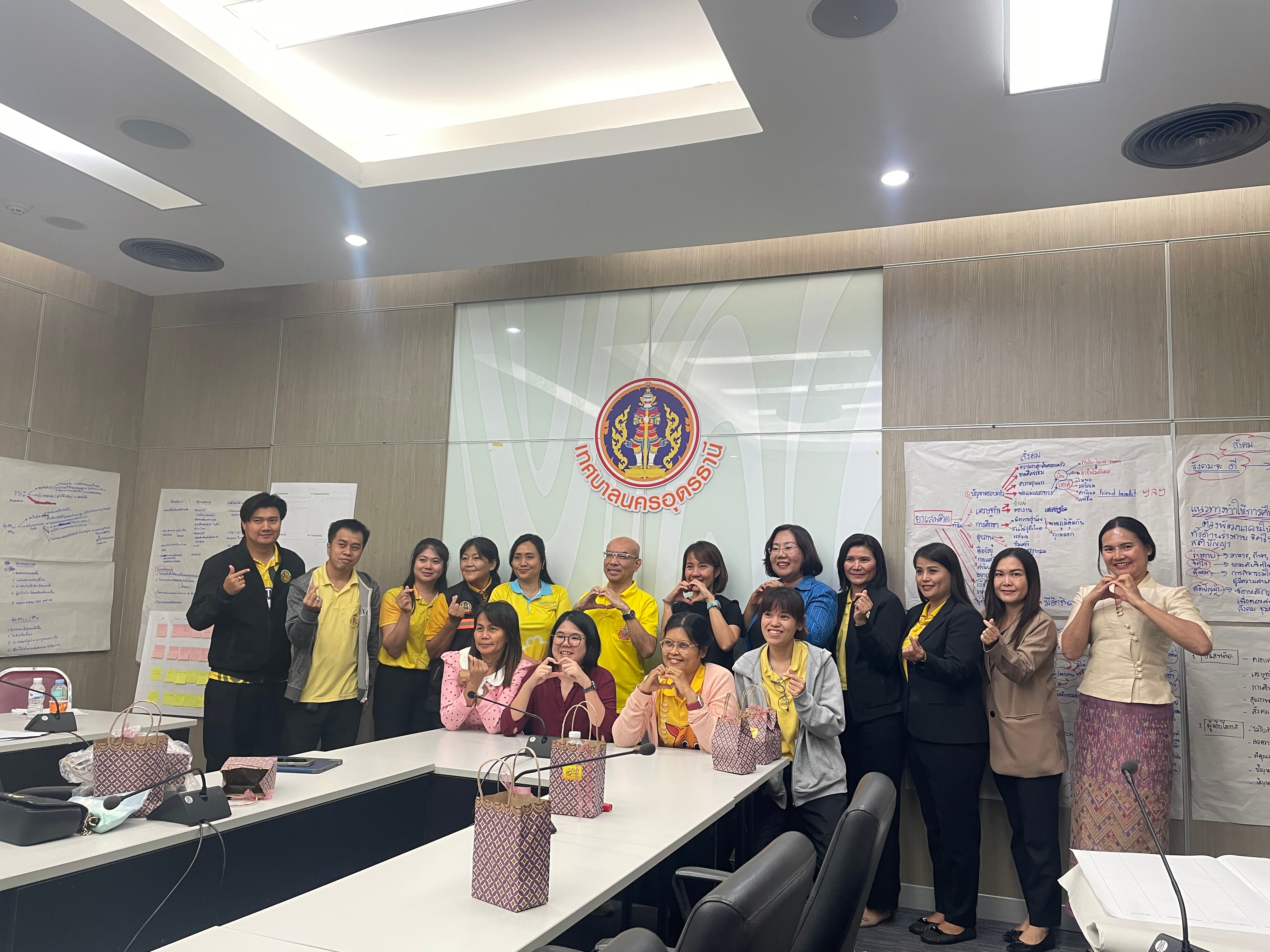
12th World Urban Forum
World Urban Forum is the biggest UN-Habitat event and the biggest urbanization-related conference, which is organized every 2 years. The 12th Session was organized on 4 – 8 November in Cairo, Egypt. I was lucky to be a part of the event by supporting more than 30 Thai delegates, including the Deputy Minister of Interior Sabeeda, on their travel and event participation.
Before the event, I coordinated between the session organizers and Thai delegates to confirm their speaking roles in sessions. Some of them had more than one session so I had to ensure that these sessions did not overlap. Then, I prepared a logistics report, covering flights, accommodation, and the schedule of each delegate, and planned for support. The report has a list of sessions in which Thailand is a part of. I also prepared talking points for UN-Habitat representatives and Thai speakers (who needed support).
During the event, I coordinated with Thai delegates to ensure their smooth participation in the opening ceremony and the other sessions. Before each session, I checked if there was any supported needed by the delegates. For some sessions, I supported the preparation and the recital of speeches for the speakers. Also, I observed all sessions that had Thai speakers to see if they needed support. Often, these sessions overlapped, so I had to run between 2 – 3 sessions, and between six halls of the Forum’s areas.
After the event, I debriefed and wrote a report to capture outputs, outcomes, and impact of the Forum, especially on Thailand.
WUF 12 is the most hectic event work for me. Egypt is not an easy country for visa and I had to make sure everyone can travel before the event. In Egypt, I had to figure out how to commute from hotel to venue, to another hotel, and etc. I had ramen in my hotel room at 9 pm for dinner a few nights because I was too tired to go out. But at the end, the event went well, making it memorable for me.
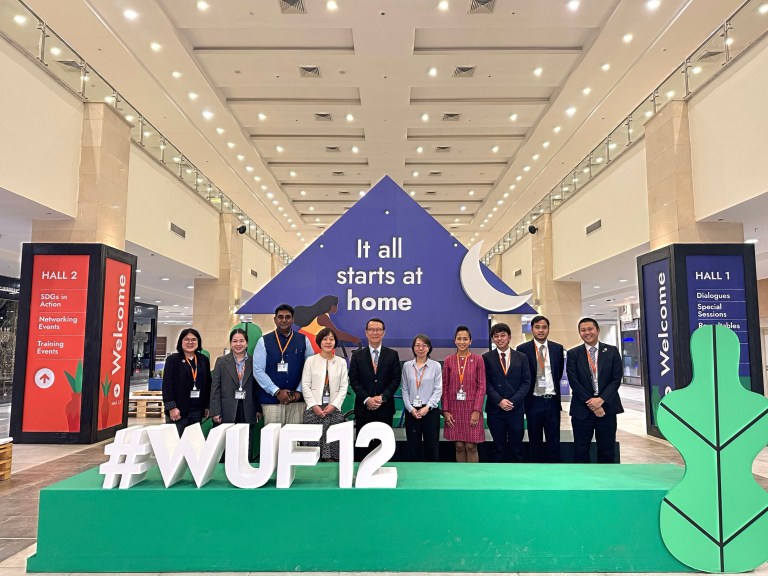
With Deputy Permanent Secretary of MFA and Thai delegates 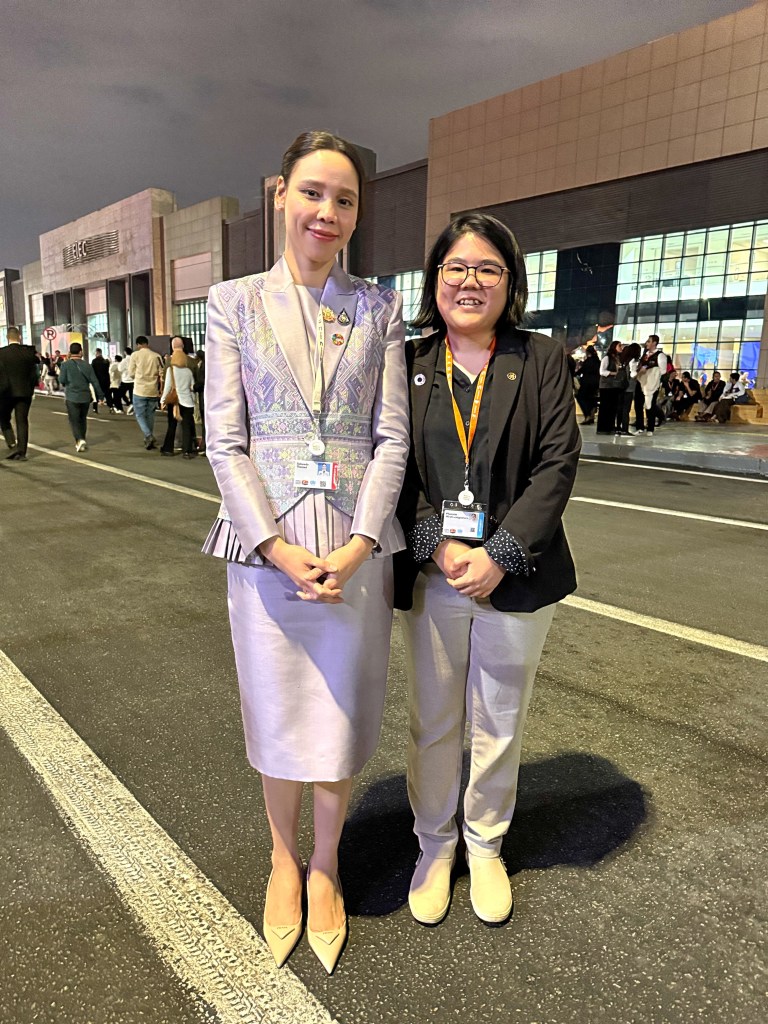
With Deputy Minister of Interior Sabeeda Thaiseth 
With Deputy Mayor of Hatyai during the opening ceremony 
Mayor of Udon Thani with UN-Habitat’s Senior Policy Advisor to the ED, Shipra 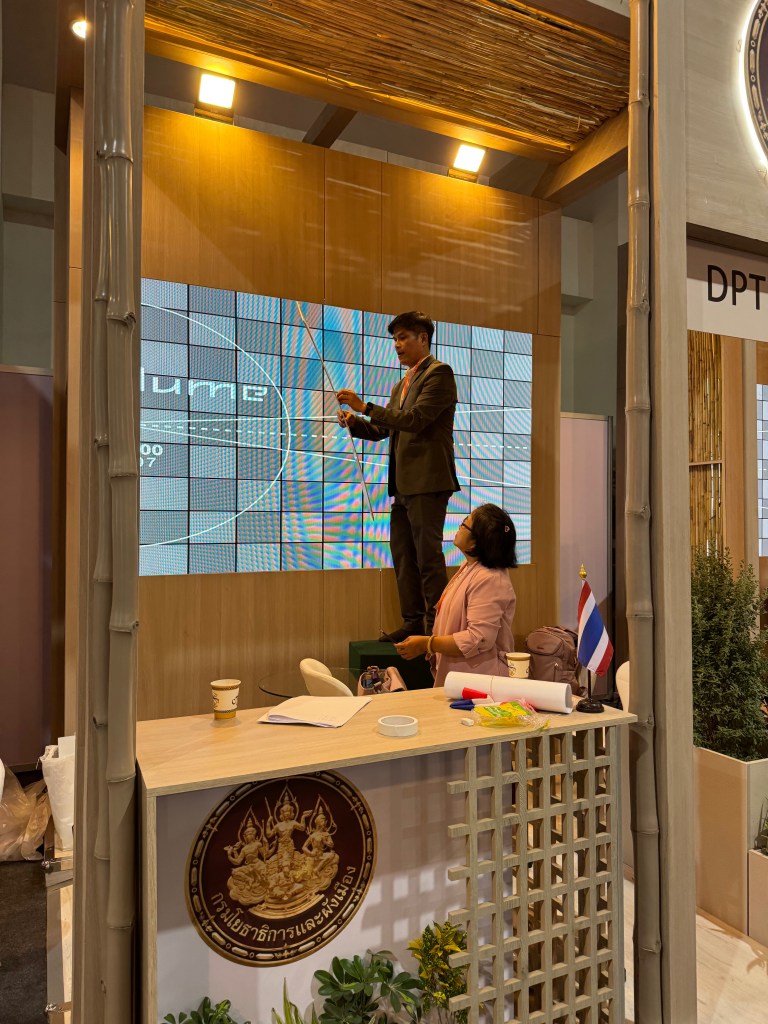
Working on Thailand’s exhibition before the opening ceremony

 PHANNISA